Ebook Download Anglicanism: A Very Short Introduction
Searching certain book in the books store might not assure you to obtain the book. Have you ever before dealt with that problem? This is a very common trouble that many individuals deal with while going to get or get such particular publication. As usual, many of them will certainly lack the book listed as well as supplies in the book stress and anxiety in addition, when it associates with the brand-new released book, the most effective vendor books, or one of the most prominent publications, it will certainly allow you await more times to get it, unless you have handle it quickly.
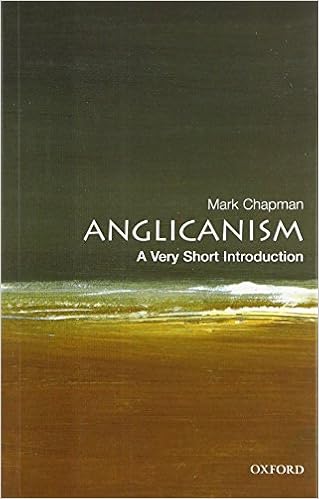
Anglicanism: A Very Short Introduction

Ebook Download Anglicanism: A Very Short Introduction
Following the great routine will disclose the excellent habit, too. When having a great friend that has analysis habit, it is required for you to have that such habit. Well, also reading is really not your style, why do not you try it when? To attract you to enjoy analysis, we will present Anglicanism: A Very Short Introduction currently. Right here this publication has the tendency to be the most referred book that lots of people read it.
Feeling tired after doing some activities in trips will certainly get you to have relaxation for some moments. It will certainly additionally aid you to fulfill the cost time. When you could appreciate your time for relaxation as well as neglect the panorama around you, it is the best time to have also reviewing. Yeah, reading publication comes to be an extremely best suggestion to do now. However, do are you really feel strange not to bring specific book?
Why ought to be reading Anglicanism: A Very Short Introduction Once more, it will depend upon how you feel and also consider it. It is certainly that people of the benefit to take when reading this Anglicanism: A Very Short Introduction; you can take more lessons straight. Also you have not undertaken it in your life; you could get the experience by reviewing Anglicanism: A Very Short Introduction As well as currently, we will present you with the online book Anglicanism: A Very Short Introduction in this internet site.
Remain to do nothing will make you really feel so burdened. It can be dealt with when you actually desire a brand-new means to life. It is not regarding the book to complete promptly. It will certainly favor to exactly how you get every lesson as well as high quality that is offered from this book. You could make plan to enjoy this book to read in just your extra time. It will no matter. So this way, pick your ideal method to enhance the Anglicanism: A Very Short Introduction as your analysis material.
About the Author
Mark Chapman, a historian and historical theologian, is Vice-Principal of Ripon College, Oxford.
Read more
Product details
Paperback: 168 pages
Publisher: Oxford University Press (July 27, 2006)
Language: English
ISBN-10: 0192806939
ISBN-13: 978-0192806932
Product Dimensions:
6.7 x 0.7 x 4.3 inches
Shipping Weight: 0.8 ounces (View shipping rates and policies)
Average Customer Review:
4.1 out of 5 stars
21 customer reviews
Amazon Best Sellers Rank:
#633,511 in Books (See Top 100 in Books)
This book suffers from a malady that infects many in this line of “Very Short†introductions: its topic is too broad and so is its scope. Chapman does a strong job of laying out the somewhat sordid history of the Anglican church and the Anglican-Episcopal communion, but a lot of the context for the history is not included in the work for what I assume is concern about space. This means one needs an extensive knowledge English and commonwealth history that would preclude most people who would need such an introductory text in the first place. That said, Chapman does not pick sides in many of these controversies and tries to remain purely in the realm of facts as much as possible.The strongest sections were on the history of evangelical and Anglo-Catholic developments as well as Anglican’s churches on-again/off-again role in Protestant reformation as a whole. The sections on the world church were too brief, although this seems to be not so much a fault of Chapman’s but the format itself. Chapman addresses important issues facing the church in the late 20th and early 21st centuries, such as female priesthood and homosexuality, and the split that has arisen from these disagreements, particularly between the American and the African parts of the communion.What this lacks, however, is a discussion of what Anglicans can agree on now. Anglican identity is covered historically, but not confessionally, leaving one to feel like all the Anglican Communion is the vapors of a national church. I suspect this is not case in most Anglican’s own experience, but the format did not allow space to address this. Since this is an introduction to Anglicanism and not just the history of the Church of England, this does seem like a significant oversight.
Mark Chapman may very well be the most promising historian of Anglicanism alive today. The author of numerous studies, he has now penned an excellent introduction to Anglicanism. This work is both historically grounded - brilliantly so, I might add - and global in scope. Chapman covers Evangelicalism, Anglo-Catholicism and the growth of Anglicanism as a global church with precision and authority, rooting his narrative in both primary sources and in the finest and most up-to-date secondary literature.This short book begins with a world that is very much unlike our own - especially for those of us who live in the United States of America. Chapman begins his work by noting the ways in which King Henry VIII not only reformed the Church of England and set it on a course that was somewhat different than that which it had been on in the medieval period, but also by noting how the early Protestant Church of England had as its fundamental aim a political project which not only created a national church, but which put the king of the England at its head. Thus, the Church of England reformed according to political doctrine first, and according to a mixture of medieval and Protestant theology, second. Chapman notes the importance of this political reform by not letting it get too far from the center throughout the rest of the narrative.One of the nice things about this book is that Chapman is unwilling to simply repeat the theses of others. It is quite common here in the United States to be told that Anglicanism has *always* consisted of three fundamentally distinct groups: Evangelicals, Liberals and Anglo-Catholics. In Chapman's narrative, however, this thesis never even sees the light of day. Rather, he devotew a chapter to Evangelicalism, which he locates as beginning in the mid-late 18th century, a chapter to Anglo-Catholicism, which begins in the early-mid 19th century, and a chapter on Global Anglicanism which develops shortly thereafter. This does not mean that liberals are excised from the history of Anglicanism, but Chapman recognizes that the attempt to create a liberal "tradition" is simply impossible: what calls itself "liberalism" today only owes its existence to the mid-late 20th century. In fact, it is only the Anglo-Catholics that actually are presented as having anything close to a "tradition" in the Church - that is, they alone have self-consciously cultivated, from generation to generation, a distinct identity and set of theological priorities. Evangelicals have not done this, but have simply existed at the margins of Anglicanism, with little more than a rejection of Anglican norms (pertaining to the sacraments and liturgy, primarily) as their guiding light. They have only come to the fore, like liberals, in the last few decades. Chapman's tracing of these threads not only does much to clear away the awful historiography that has come to be seen as a type of gospel in some circles, but opens up a space for exploring a far greater level of theological coherence in the church than this other historiography has allowed for!The chapter on the beginnings of the Anglican Communion in the 19th century is especially good, as it brings pretty much everything to a head, and shows that the problem with the Church today is basically that whereas the Church of England had a "supreme governor" in the person of the monarch, the Anglican Communion does not have such a thing but, instead, relies upon good will, charity and an anti-papal conciliar mode of working together. There is no one to enforce anything in the Church - no monarch and no pope - just bishops to agree or disagree as various issues come up. It is most recently that this system has largely ceased to function as well as it often had - but not always, as Chapman shows - in the past. What will happen in the future remains anybody's - and, perhaps, everybody's - guess.My only complaint with the book is that Chapman does not always cite his primary sources. I imagine that this has something to do with the nature of this series - it's not for specialists, but for thoughtful laypersons. However, he gives a fine bibliography that will prove to be an excellent guide for anyone interested in studying Anglicanism further. Chapman's words that end the book are all too pertinent today in our world - a world shaped by global terrorism and by American imperialism - and are the advice that everyone in the Anglican Communion absolutely must take to heart: "The desire to listen and to enter into conversation requires voluntary restraint and self-denial among the different factions. The problem is that in a world which seeks clear decisions and absolute certainties such Christian humility might not any longer be considered a virtue" (144).[This books perfectly complements Michael Ramsey's Anglican Spirit.]
Oxford's Very Short Introduction series is uneven. Given the large (and still growing) number of volumes in it, I suppose this is only to be expected. But there's nothing uneven about Mark Chapman's Anglicanism. It's a very good introduction.The theme that runs throughout the book is Chapman's claim that the defining characteristic of the Anglican communion is its sometimes fruitful, sometimes stagnant debate over authority. Unlike the Roman church, there is no central magister in contemporary Anglicanism. Primates, councils, and indeed even the titular "head" of the communion, the Archbishop of Canterbury, have little more than moral authority. This is quite unlike the early days of Anglicanism, when real authority was vested in the English monarch-cum-Church leader. And, of course, Anglicanism was itself birthed out of a dispute between London and Rome over authority.Between then and now, the Anglican communion has wrangled over where authority lies. As Chapman chronicles, evangelical Anglicans, both yesterday's puritans and today's charismatics, put a high premium on individual conscience and scripture. "High" churchmen and Anglo-Catholics see authority residing in tradition, reason, and ecclesial hierarchy.National churches, in keeping with Reformation ideals, are vested with a great deal of autonomy, and in the US tradition, this autonomy extends in large measure even to dioceses and parishes. Recent controversies regarding ordination of women and gays, as well as same-sex blessings, are generated by this autonomy.I wish Chapman had reflected a bit on the peculiar tension between autonomy and authority that seems to be characteristic of the Anglican communion. This tension historically veers from one side to the other, but has thus far managed to endure. Perhaps it's a recipe not only for ecclesial authority, but political authority as well.At any rate, a well-written and readable book, primarily of interest to Anglicans but perhaps also to followers of recent Anglican debates.
Anglicanism: A Very Short Introduction PDF
Anglicanism: A Very Short Introduction EPub
Anglicanism: A Very Short Introduction Doc
Anglicanism: A Very Short Introduction iBooks
Anglicanism: A Very Short Introduction rtf
Anglicanism: A Very Short Introduction Mobipocket
Anglicanism: A Very Short Introduction Kindle
Post a Comment